Custom Website vs Template: What’s the Real Cost?

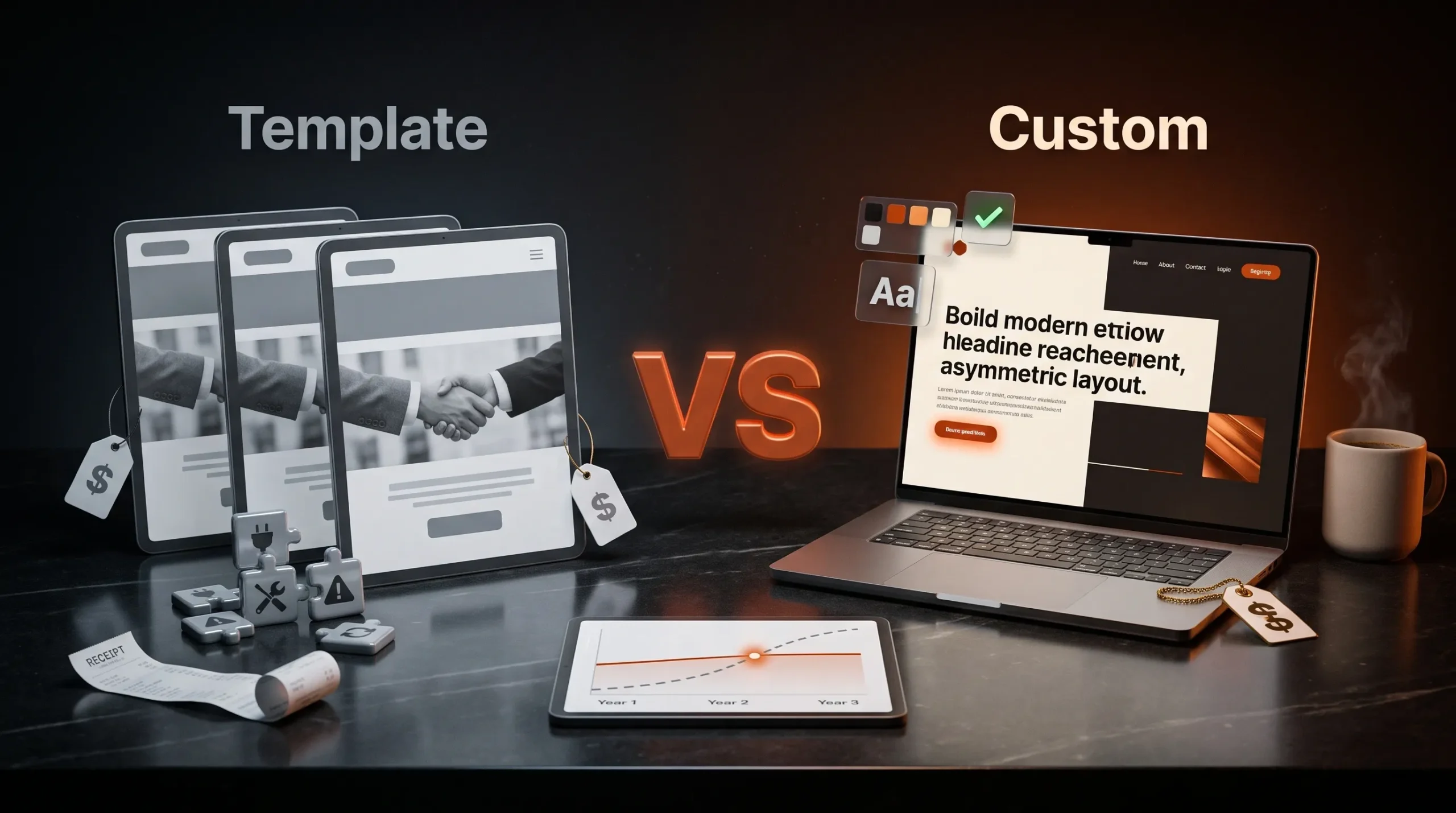
A template gets a site live quickly and cheaply. A custom design costs more upfront and fits your business exactly. The useful comparison is what each costs over the next two or three years.

Article

01
What a Template Gets You
A template, or theme, is a ready-made design you fill with your own content. You get a working site in days, a lower upfront price and a layout other businesses have already tested. For a new business testing an idea, or a simple site with a few pages, that can be the right call.
02
Where Templates Start to Cost
Costs appear when your business doesn't fit the template. Any change outside its design means fighting the theme or adding plugins. That includes a new kind of section, a different mobile layout or a custom form. Popular templates are used by thousands of sites, so yours can end up looking like a competitor's. Many themes also ship with features you never use, and that extra code slows pages down.
03
What a Custom Website Gets You
A custom site is designed around your content, your audience and the action you want visitors to take. Every page is planned for its job, so there are fewer workarounds and less unused code. Your brand looks like itself, and the site can take on new pages and features without being rebuilt around someone else's layout.
04
Comparing the Real Cost
Compare the two over two to three years instead of at launch. For a template, add its price, the plugins you will need, the hours spent bending it to fit and the redesign when you outgrow it. For a custom build, add the design and development fee and ongoing updates. If your website is central to how you win clients, the custom route often works out cheaper over that period. For a simple brochure site you will rarely change, a well-chosen template may be enough.
05
How to Decide
Choose a template if you need a site live this month on a small budget. It also suits a site with little content that you expect to replace within a year or two. Choose custom if your site has to stand apart from competitors, explain a complex service or hold content your team will keep adding. Every ENFORG project starts from a blank canvas in Figma. You get a fixed price before any work starts, so the cost of going custom is clear from day one.
06
How Much Does a Custom Website Cost?
It depends on the number of pages, the amount of content and the platform. Our projects start at convenient, and you get a fixed price in writing before any work starts.
07
Can I Start With a Template and Go Custom Later?
Yes, and it is a common path. Keep your content, domain and analytics in good order so they move cleanly. Expect the custom site to be a new build: the design and structure are replaced and the content carries over.

Your Website Should Move With Your Brand.

A redesign isn’t always about making things look newer. It’s about making your website clearer, more useful and more aligned with where your brand is today.

More Ideas. Better Websites.

More thoughts on web design, user experience and building digital experiences that stand out.

What Makes a Website Feel Premium?

Visitors decide in the first few seconds whether a site feels premium. That decision rests on six details: type, spacing, imagery, motion, speed and words.

Custom Website vs Template: What’s the Real Cost?

A template gets a site live quickly and cheaply. A custom design costs more upfront and fits your business exactly. The useful comparison is what each costs over the next two or three years.

Why Good UI/UX Starts Before the Design

Many website problems that look like design problems start earlier: unclear goals, a vague audience or content written last. Good UI/UX settles those before anyone opens Figma.