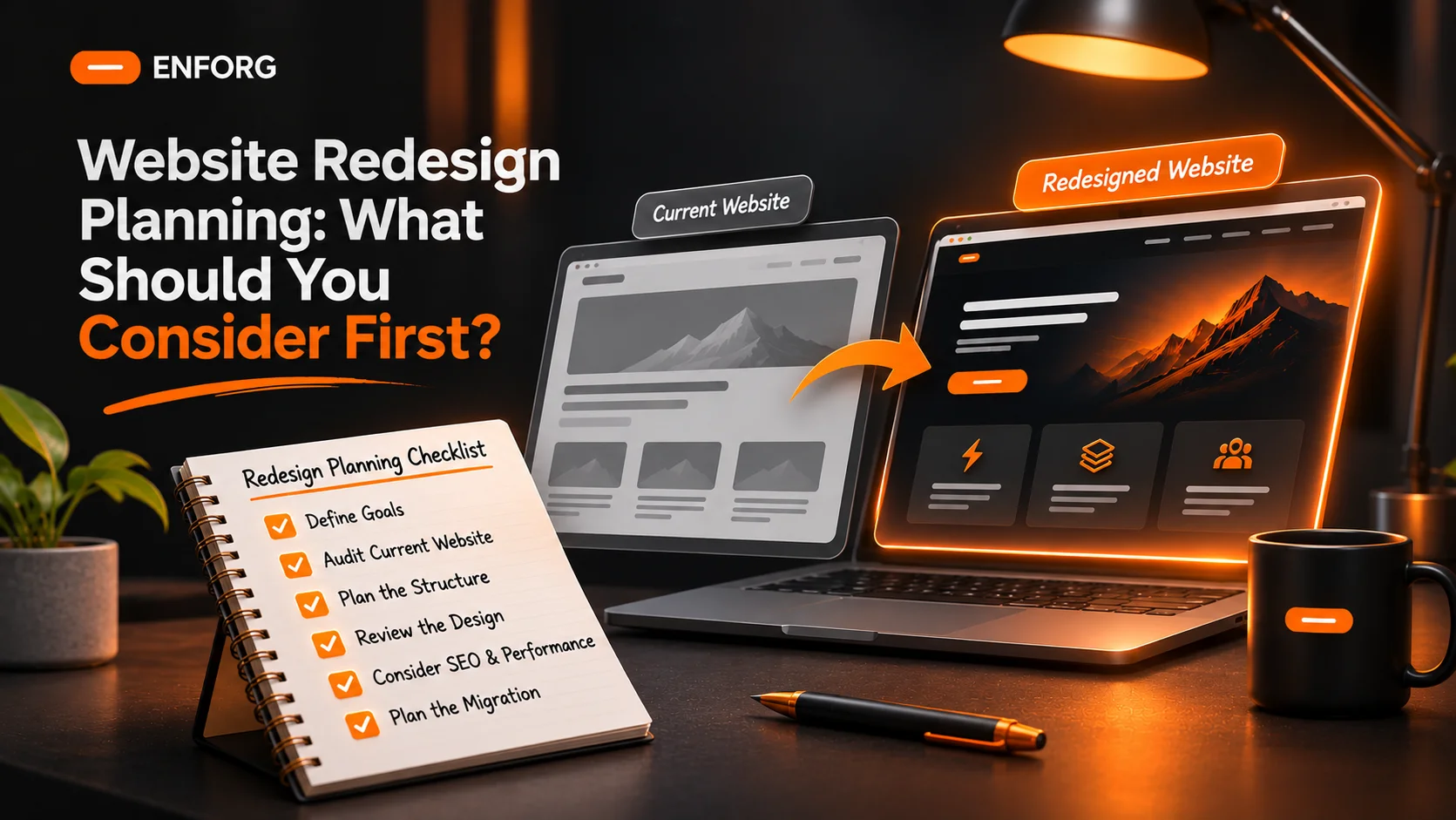
Website Redesign Planning: What Should You Consider First?

Planning a website redesign? Discover what to consider first, including business goals, website audits, user experience, SEO, content and development requirements.
Article
01
Define Why Your Website Needs a Redesign
Start by identifying what is not working on your existing website. Your design may look outdated, navigation may be confusing, mobile usability may be poor or the website may no longer reflect your current services. Understanding the actual reasons for a redesign helps establish clear priorities. Instead of changing everything without direction, focus on improvements that solve genuine business and user experience problems.
02
Audit Your Existing Website Before Making Changes
Review your current website to understand what should be improved, retained or removed. Evaluate important pages, navigation, forms, images, functionality and overall performance. Identify outdated information, broken links, duplicate content and features that are no longer useful. This audit creates a practical starting point for the redesign and helps prevent valuable content or functionality from being overlooked.
03
Understand Your Audience and User Experience
A redesign should make the website easier for your intended audience to use. Consider what visitors are looking for, which pages they visit most and where they may experience difficulties. Review navigation, page layouts, enquiry forms and important user journeys. Designing around real customer needs helps create a more intuitive experience rather than focusing only on visual appearance.
04
Plan Your New Website Structure and Content
Before designing individual pages, establish a clear sitemap and decide how information should be organised. Determine which existing pages need updating, which new pages are required and how visitors should move between related sections. Review headlines, service descriptions, calls to action and supporting content. A well-planned structure makes the redesigned website easier to navigate and gives every page a clear purpose.
05
Protect Your Existing SEO Performance
A website redesign can affect organic search visibility if important URLs, content and internal links are changed without proper planning. Identify pages that already receive organic traffic, preserve valuable content and plan relevant redirects whenever URLs change. Review title tags, meta descriptions, heading structures and internal links before launch. Keeping SEO requirements involved throughout the redesign helps reduce avoidable search performance issues.
06
Choose the Right Design Direction and Technology
Your new website should reflect your brand while supporting the functionality your business needs. Establish a visual direction for typography, colours, imagery and layouts before choosing the final development approach. Consider whether WordPress, Webflow or another suitable platform fits your content management and technical requirements. The right combination of design and technology makes the website easier to maintain and expand.
07
Plan Functionality, Integrations and Mobile Experience
List the features your redesigned website needs before development begins. These may include contact forms, booking systems, payment gateways, CRM integrations, animations or custom functionality. Also consider how these features should work across desktop, tablet and mobile devices. Planning technical requirements early helps establish realistic project expectations and prevents important functionality from becoming an afterthought.
08
Approve the Design and Prepare for a Controlled Launch
Before development starts, review the proposed designs, confirm the project scope and establish clear delivery expectations. Test the completed website before launch, including navigation, forms, responsive layouts, redirects, page speed and essential functionality. Prepare backups and verify that tracking and indexing settings are configured correctly. At ENFORG, our design-first process starts with Figma designs, agrees on a fixed price before development and gets design approval before the build begins. This gives businesses a clearer direction and helps reduce uncertainty throughout the redesign process.

Your Website Should Move With Your Brand.

A redesign isn’t always about making things look newer. It’s about making your website clearer, more useful and more aligned with where your brand is today.

Enforg Team

Enforg is a web design and development studio in Jaipur, India, founded in 2021. We design in Figma and build in Webflow, Framer, WordPress and Wix Studio. Vetted Pro and Top Rated on Fiverr, with 998+ client projects delivered.

More Ideas. Better Websites.

More thoughts on web design, user experience and building digital experiences that stand out.

How API Integrations Make Business Websites More Powerful

Discover how API integrations make business websites more powerful. Learn how connecting CRMs, payment gateways and external tools improves automation, data exchange and business efficiency.

What Happens During a Professional Website Development Process?

Discover what happens during a professional website development process. Explore project planning, Figma design, development, testing, launch and ongoing support.

Why Your Website Needs a Mobile-First Design Approach

Discover why mobile-first website design matters for modern businesses. Learn how responsive layouts, mobile navigation, performance and usability improve customer experience.