How to Plan a Website Before Starting Development

Learn how to plan a website before development begins. Explore project goals, audience research, sitemap creation, content planning, wireframes and design approval.
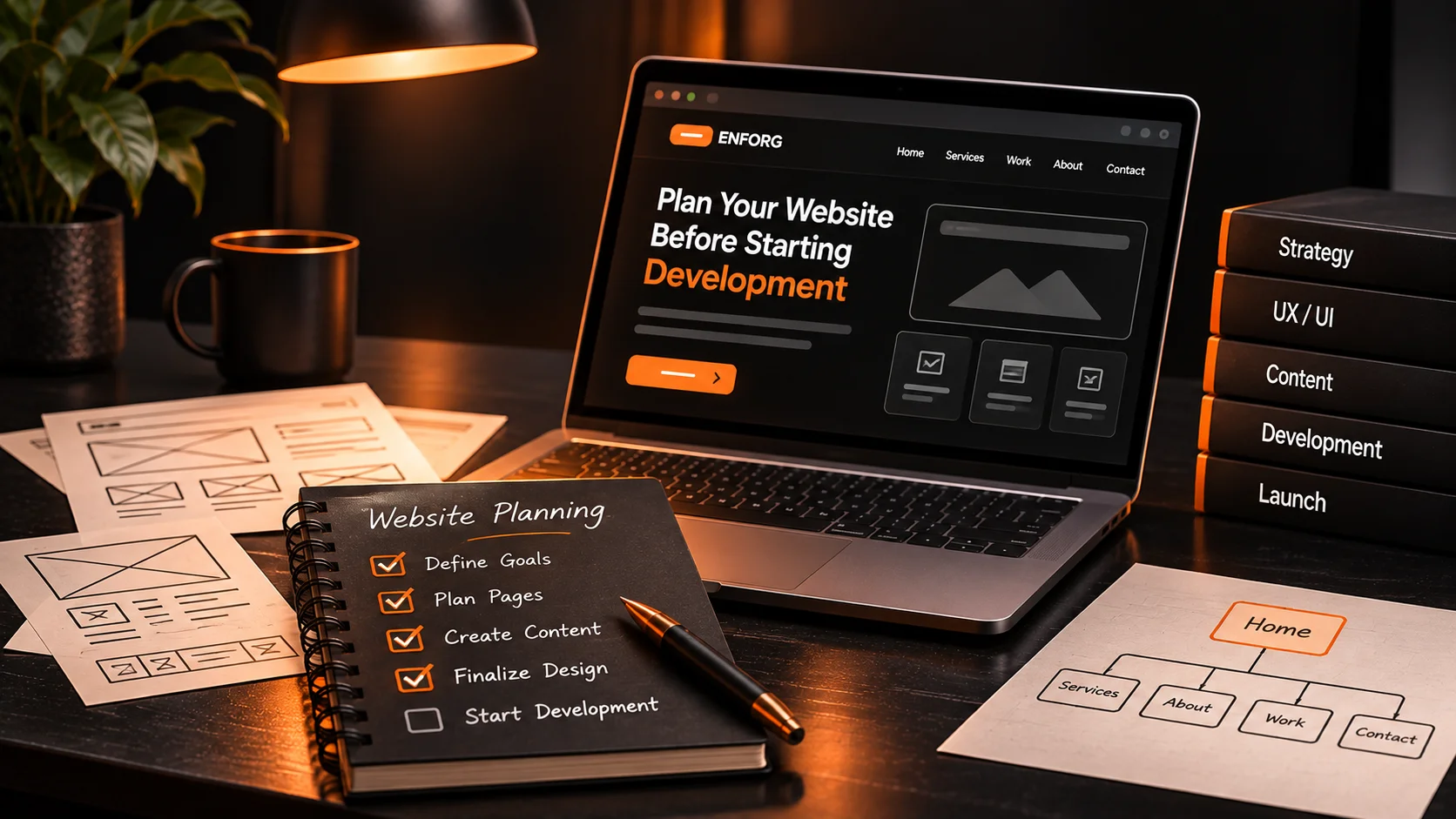
Cover image for the article: How to Plan a Website Before Starting Development
Article
01
Define Your Website Goals First
Every website should have a clear purpose. Before discussing layouts or technology, identify what your business wants the website to achieve. Your primary objective might be generating enquiries, selling products, presenting services or building brand awareness. These goals influence the website's structure, functionality and content. A clear direction also helps the design and development team make decisions that support actual business requirements rather than adding unnecessary features.
02
Understand Your Target Audience
A website should be planned around the people who will use it. Consider your audience's needs, expectations, challenges and the information they need before making a decision. Understanding these factors helps determine how services should be presented, which pages matter most and what actions visitors should be encouraged to take. When planning starts with the audience, the website becomes more relevant and easier to navigate.
03
Create a Sitemap and Website Structure
A sitemap establishes how different pages connect and where information belongs. Start by identifying essential pages such as Home, About, Services, Projects and Contact, then organise supporting pages into logical categories. This creates a clear hierarchy for navigation and content. Planning the structure before development also reduces duplicated sections and makes it easier to understand how visitors will move through the website.
04
List the Required Features and Functionality
Different websites have different technical requirements. A simple business website may need contact forms and service pages, while a more advanced project could require bookings, user accounts, payment gateways, filters or third-party integrations. Identify these requirements before choosing a development platform. Clear functionality planning helps estimate the work involved, select suitable tools and avoid discovering major technical requirements halfway through development.
05
Prepare Your Website Content in Advance
Content should be considered during planning rather than added as an afterthought. Prepare the main headlines, service descriptions, company information, calls to action and supporting material for each page. Identify which images, videos and project examples are required. Having content ready gives designers a better understanding of the actual information that needs to fit into each layout, resulting in more practical and consistent page designs.
06
Use Wireframes to Plan Page Layouts
Wireframes provide a basic visual representation of a website before detailed design begins. They show where headings, images, navigation, content sections and buttons will appear without focusing on final colours or decorative styling. This makes it easier to review page structure and identify missing information early. Wireframes also help businesses and designers agree on the overall layout before investing time in detailed visual design.
07
Create Figma Designs and Approve the Visual Direction
Once the structure and wireframes are clear, detailed website designs can be created in Figma. This stage establishes typography, colours, spacing, imagery, reusable components and responsive layouts. Businesses can review how the website will look before development starts and request changes while the project is still in the design stage. Approving the design provides developers with a clear visual reference and reduces uncertainty during implementation.
08
Finalise the Development Plan Before Building
Before development begins, confirm the approved designs, required functionality, content, platform, project scope and delivery expectations. Establish a realistic timeline and agree on the project price so everyone understands what is included. This creates a shared reference for the development team and the business. At ENFORG, we follow a design-first process that starts with Figma designs, agrees on a fixed price before development and gets design approval before the build begins. This helps establish a clear direction before the website moves into development.

Your Website Should Move With Your Brand.

A redesign isn’t always about making things look newer. It’s about making your website clearer, more useful and more aligned with where your brand is today.

Enforg Team

Enforg is a web design and development studio in Jaipur, India, founded in 2021. We design in Figma and build in Webflow, Framer, WordPress and Wix Studio. Vetted Pro and Top Rated on Fiverr, with 998+ client projects delivered.

More Ideas. Better Websites.

More thoughts on web design, user experience and building digital experiences that stand out.

How API Integrations Make Business Websites More Powerful

Discover how API integrations make business websites more powerful. Learn how connecting CRMs, payment gateways and external tools improves automation, data exchange and business efficiency.

What Happens During a Professional Website Development Process?

Discover what happens during a professional website development process. Explore project planning, Figma design, development, testing, launch and ongoing support.

Why Your Website Needs a Mobile-First Design Approach

Discover why mobile-first website design matters for modern businesses. Learn how responsive layouts, mobile navigation, performance and usability improve customer experience.