How Long Does It Take to Build a Website?

A custom website can take three weeks or three months. Here is a realistic timeline for each phase, and what speeds a project up or slows it down.
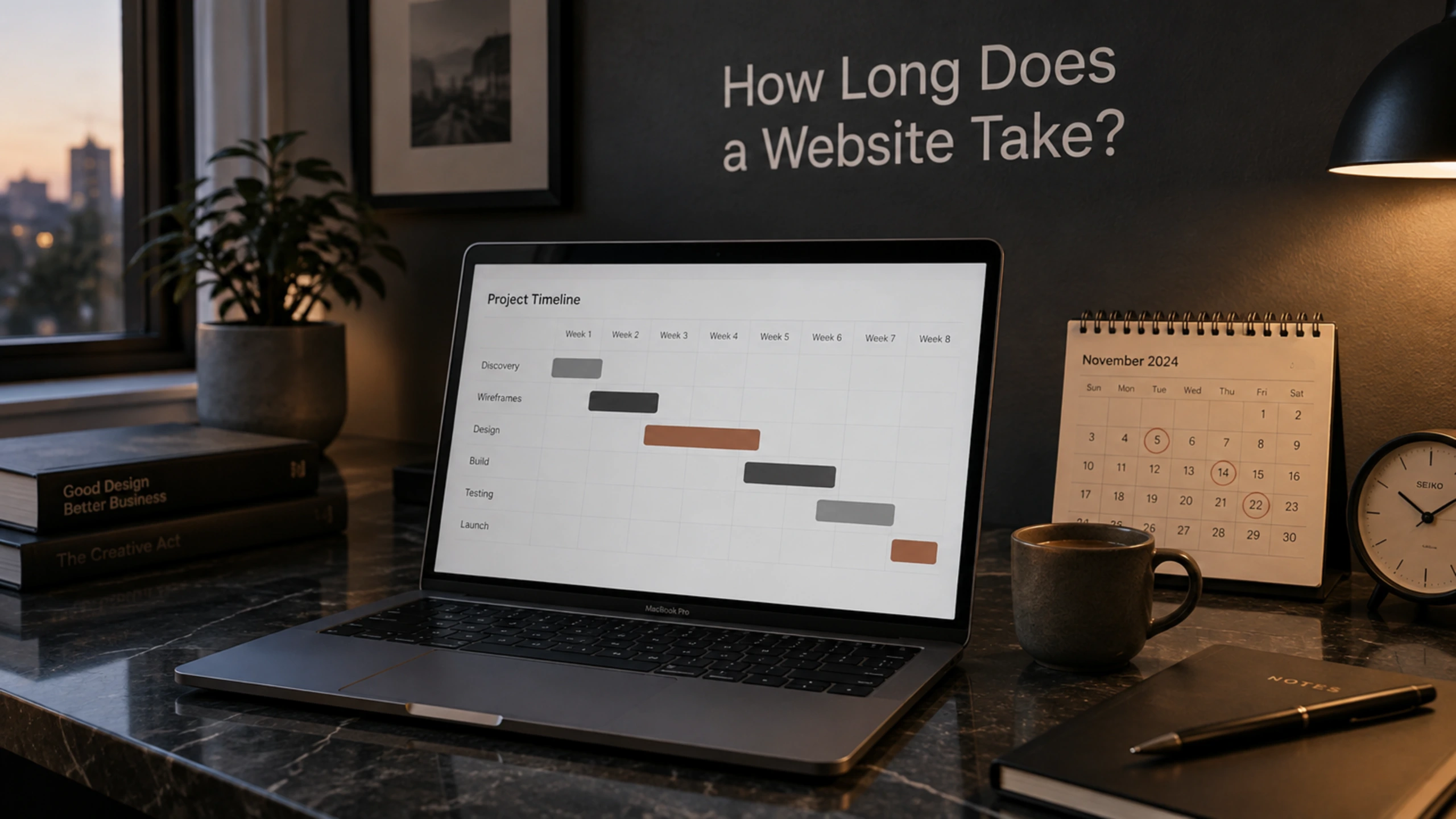
How long does it take to build a website: project timeline with design and build phases on a laptop next to a desk calendar
Article
01
The Short Answer
For a custom website, the range is wide. A small site of a few pages often takes three to six weeks. A typical business site of ten to fifteen pages takes six to ten weeks. A large site with e-commerce, integrations or several languages can run three months or more. These are typical ranges, not promises. The real timeline depends on scope, content and how quickly decisions get made.
02
Discovery: The First Week
Every good project starts by understanding the business: goals, audience, competitors, pages and features. This usually takes a few days to a week. Skipping it feels faster, but it almost always costs time later, because unclear goals turn into rework the moment the first design is on the table.
03
Wireframes and Structure
Before any visual design, the page structure gets mapped in simple wireframes: what goes on each page, and in what order. For most sites this takes about a week. Agreeing on structure first keeps design rounds short, because the conversation becomes about how things look, not about what goes where.
04
Design: The Longest Creative Phase
Custom design in a tool like Figma usually takes two to three weeks for a business site. That covers the homepage, key inner pages, mobile layouts and one or two rounds of feedback. More unique pages, extra revision rounds or a brand-new identity stretch this phase. Fast, clear feedback shrinks it.
05
Build and Content
Building the approved design in WordPress, Webflow or Framer usually takes two to four weeks, depending on CMS setup, animations and integrations. Content is the classic hold-up. Projects stall far more often waiting for copy, photos and product details than waiting for development. Having content ready early is the single biggest time saver.
06
Testing and Launch
Before going live, the site is checked across browsers and devices, forms and links are tested, speed is tuned and SEO basics are set up. For a redesign, redirects from old URLs are mapped and checked. Plan for about a week. Launch day itself is short when the groundwork is done properly.
07
What Slows Projects Down
The same few things cause most delays: late content, too many decision-makers, features added mid-project, vague feedback and long gaps between review rounds. None of them are technical. A single point of contact on your side and a shared content deadline usually save more time than any tool or shortcut.
08
How to Get Your Site Live Faster
Gather your content before kickoff, name one decision-maker, park extra features for a phase two and reply to review rounds within a couple of days. At Enforg, we agree on scope, timeline and a fixed price before we start, so you know your launch date as clearly as your cost. Working to a deadline? Tell us on the first call.

Your Website Should Move With Your Brand.

A redesign isn’t always about making things look newer. It’s about making your website clearer, more useful and more aligned with where your brand is today.

Enforg Team

Enforg is a web design and development studio in Jaipur, India, founded in 2021. We design in Figma and build in Webflow, Framer, WordPress and Wix Studio. Vetted Pro and Top Rated on Fiverr, with 998+ client projects delivered.

More Ideas. Better Websites.

More thoughts on web design, user experience and building digital experiences that stand out.

How API Integrations Make Business Websites More Powerful

Discover how API integrations make business websites more powerful. Learn how connecting CRMs, payment gateways and external tools improves automation, data exchange and business efficiency.

What Happens During a Professional Website Development Process?

Discover what happens during a professional website development process. Explore project planning, Figma design, development, testing, launch and ongoing support.

Why Your Website Needs a Mobile-First Design Approach

Discover why mobile-first website design matters for modern businesses. Learn how responsive layouts, mobile navigation, performance and usability improve customer experience.