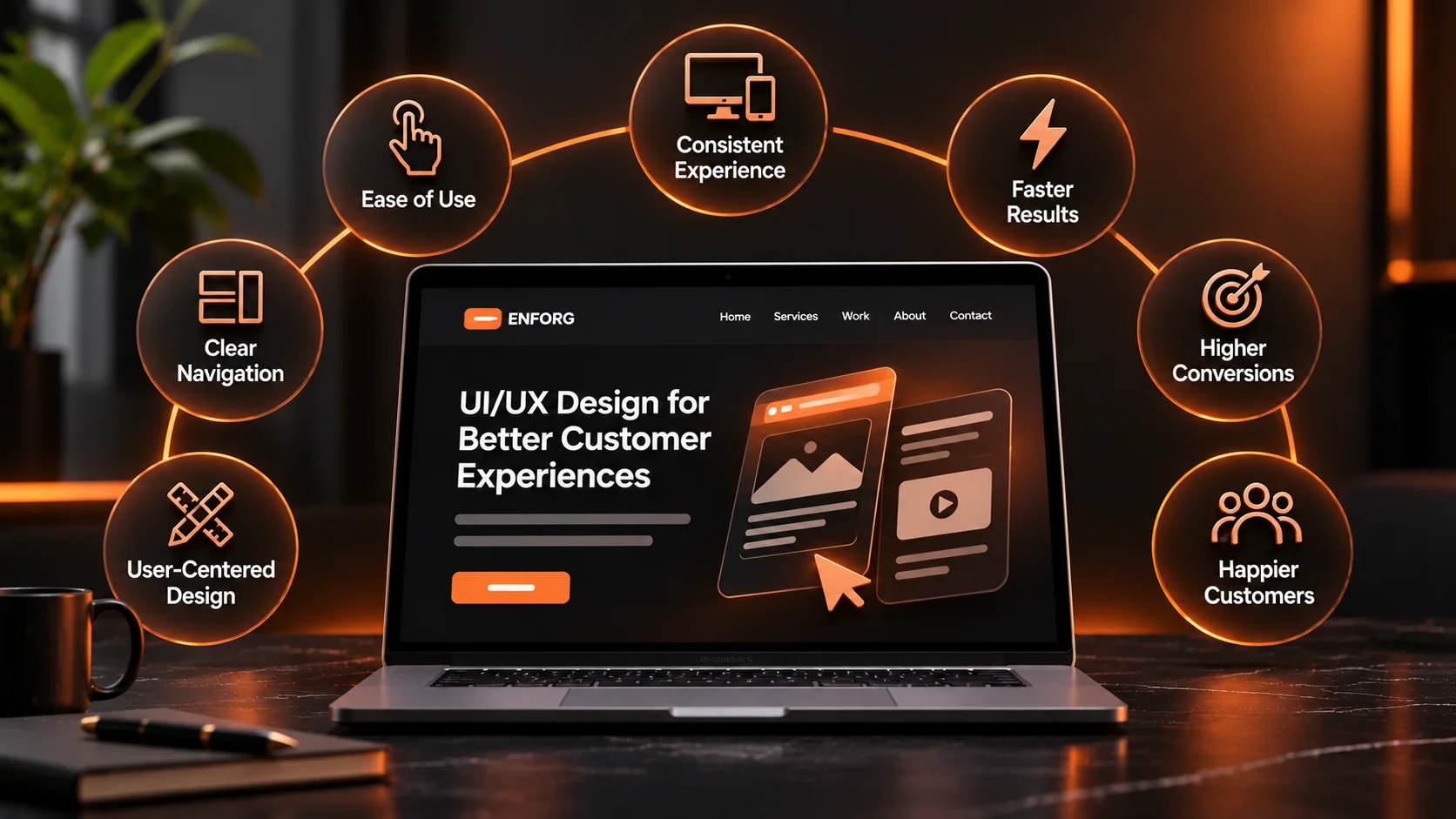
How Good UI/UX Design Improves Customer Experience

Discover how good UI/UX design improves customer experience through better usability, intuitive navigation, visual consistency and effective website interactions.
Cover image for the article: How Good UI/UX Design Improves Customer Experience
Article
01
UI and UX Design Work Together
UI and UX are closely connected, but they serve different purposes. UI focuses on visual elements such as typography, colours, buttons, layouts and interactive components. UX considers the complete journey a visitor takes while using the website. A visually attractive interface cannot compensate for confusing navigation or difficult interactions. Similarly, a functional website may feel unprofessional if its visual design lacks consistency. Both disciplines need to work together to create a useful and engaging digital experience.
02
First Impressions Influence Customer Perception
Visitors form an initial impression of a website through its visual presentation, layout and overall clarity. Inconsistent typography, cluttered sections and poorly organised content can make a business appear less professional. A thoughtful design creates visual consistency through appropriate spacing, colours, imagery and typography. When the interface feels organised and communicates information clearly, visitors can focus on understanding your services instead of figuring out how the website works.
03
Simple Navigation Makes Websites Easier to Use
Visitors should be able to find important information without searching through confusing menus or unnecessary page sections. Clear navigation helps people understand where they are and what they can explore next. Logical page structures, descriptive menu labels and consistent navigation patterns reduce friction throughout the browsing experience. When visitors can move between services, information and contact pages naturally, the website becomes easier to understand and use.
04
Visual Hierarchy Helps Visitors Find Important Information
Not every element on a website deserves the same level of attention. Visual hierarchy guides visitors towards important information using heading sizes, spacing, contrast, alignment and placement. A well-structured page makes its main message easy to recognise and separates supporting information into understandable sections. Clear calls to action also help visitors identify the next step without competing with unnecessary visual elements.
05
Responsive Design Creates a Consistent Experience
Customers access websites through different devices, screen sizes and browsing environments. A layout that works on desktop may become difficult to use when menus, buttons and content are squeezed onto smaller screens. Responsive UI/UX design adapts the experience to each device while maintaining readability, accessibility and functionality. Proper spacing, flexible layouts and touch-friendly controls help visitors interact comfortably whether they use a desktop, tablet or mobile phone.
06
Faster and More Intuitive Interactions Reduce Friction
Unnecessary steps, confusing forms and unpredictable interface behaviour can interrupt a visitor's journey. Good UX design removes these obstacles by making interactions clear and straightforward. Forms should request only relevant information, buttons should communicate their purpose and feedback should appear when visitors complete an action. Consistent interaction patterns help users understand what will happen next and complete tasks with greater confidence.
07
Consistent Design Builds Brand Recognition and Trust
A website should feel like one connected experience rather than a collection of unrelated pages. Different button styles, inconsistent spacing and changing typography can make the interface feel unfinished. A consistent design system establishes reusable colours, fonts, components and layout rules. This creates a recognisable visual identity while making future website updates easier to manage. Consistency also helps visitors feel more comfortable as they move between different sections.
08
Better UX Can Support Business Conversions
A good customer experience makes it easier for visitors to understand your offering and take meaningful action. Clear service information, visible calls to action and straightforward enquiry forms help remove unnecessary barriers between interest and conversion. However, good design alone cannot guarantee more sales or enquiries. Results also depend on your offer, audience, content and overall marketing strategy. A well-designed website provides a stronger foundation for turning visitor interest into meaningful business opportunities. At ENFORG, we approach website projects with a design-first process. We start with Figma designs, agree on a fixed price before development and get design approval before the build begins. This helps establish a clear visual direction and user experience before development starts.

Your Website Should Move With Your Brand.

A redesign isn’t always about making things look newer. It’s about making your website clearer, more useful and more aligned with where your brand is today.

Enforg Team

Enforg is a web design and development studio in Jaipur, India, founded in 2021. We design in Figma and build in Webflow, Framer, WordPress and Wix Studio. Vetted Pro and Top Rated on Fiverr, with 998+ client projects delivered.

More Ideas. Better Websites.

More thoughts on web design, user experience and building digital experiences that stand out.

How API Integrations Make Business Websites More Powerful

Discover how API integrations make business websites more powerful. Learn how connecting CRMs, payment gateways and external tools improves automation, data exchange and business efficiency.

What Happens During a Professional Website Development Process?

Discover what happens during a professional website development process. Explore project planning, Figma design, development, testing, launch and ongoing support.

Why Your Website Needs a Mobile-First Design Approach

Discover why mobile-first website design matters for modern businesses. Learn how responsive layouts, mobile navigation, performance and usability improve customer experience.