Why Your Website Needs a Clear Content Strategy

Discover why your website needs a clear content strategy. Learn how audience research, structured messaging, SEO and content planning support business growth.
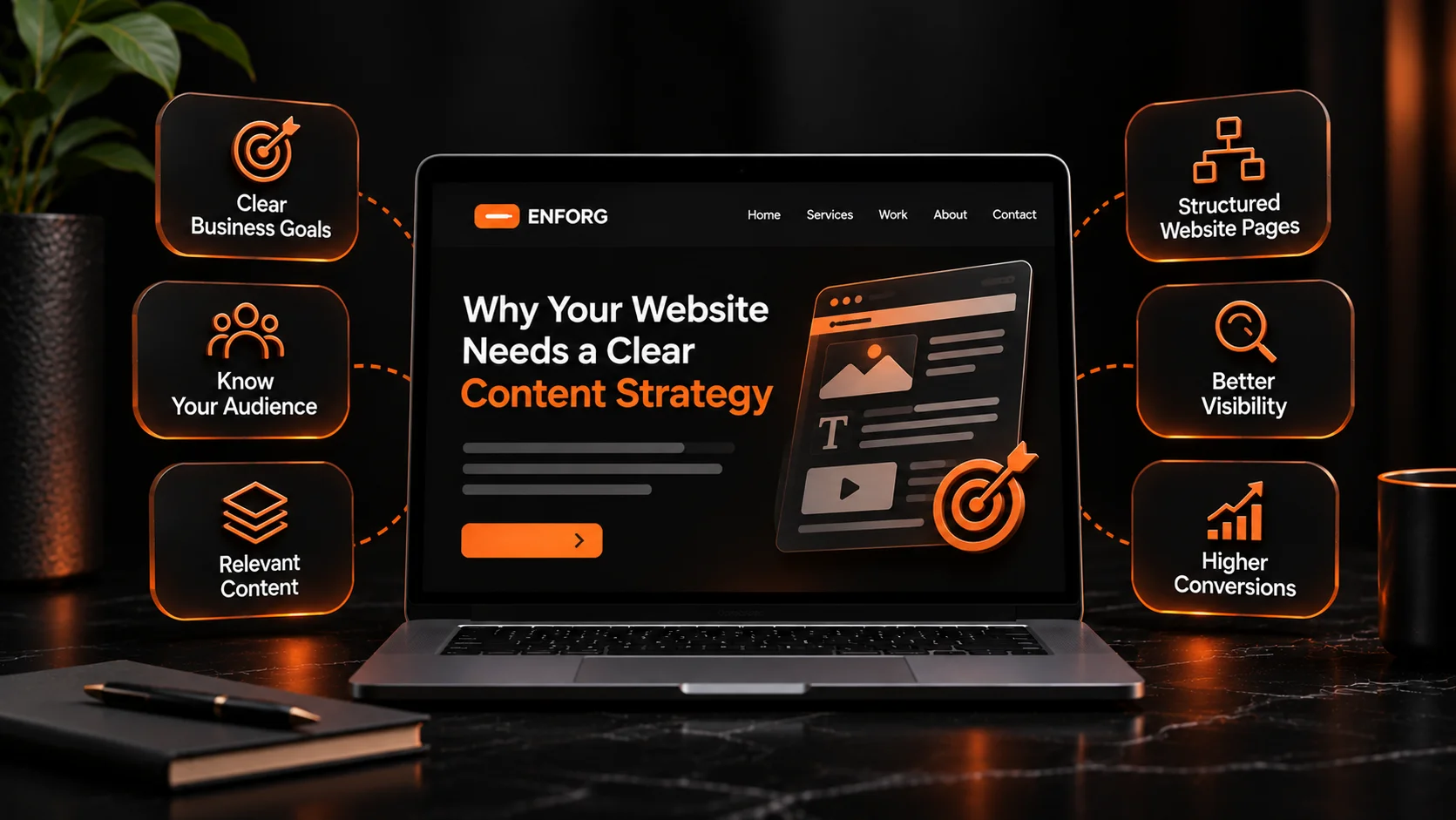
Cover image for the article: Why Your Website Needs a Clear Content Strategy
Article
01
Content Should Start With Your Business Goals
Before writing website copy, identify what the website needs to achieve. Your primary goal might be generating enquiries, showcasing projects, selling products or building brand awareness. These objectives influence which pages you need, what information they should contain and how visitors should move through the website. A clear goal keeps content focused and prevents unnecessary sections from distracting visitors.
02
Understand Who You Are Writing For
Effective website content speaks to the people you want to reach. Understand your audience's needs, common questions, challenges and reasons for considering your services. This helps you choose relevant language and explain your offering in a way visitors can understand. Instead of focusing entirely on what your business wants to say, prioritise the information potential customers need to make informed decisions.
03
Plan Your Website Pages Before Writing
A content strategy gives every page a clear purpose. Start by identifying essential pages such as Home, About, Services, Projects and Contact, then determine what information belongs on each one. Supporting pages can provide more detail about individual services, industries or specific solutions. Planning this structure early creates a logical website hierarchy and reduces duplicated or disconnected content.
04
Keep Your Messaging Clear and Consistent
Your website should communicate a recognisable message across every page. Different descriptions of the same service, inconsistent terminology and vague headlines can make your business difficult to understand. Establish a consistent tone of voice and explain your services using straightforward language. Visitors should be able to understand what you offer, who you help and why your business is relevant without reading unnecessary explanations.
05
Structure Content Around the User Journey
Visitors rarely make decisions after reading just one section. They may first discover your business, explore your services, review your experience and then decide whether to contact you. Your content should support each stage of that journey. Introduce your offering clearly, provide useful supporting information and make the next step easy to find. A logical content flow helps visitors move through the website without feeling overwhelmed.
06
Build SEO Into Your Content Planning
Search engine optimisation should be considered before website content is finalised. Identify the topics and search terms relevant to your services, then organise pages around meaningful search intent. Each important page should have a clear title, descriptive headings and useful information that answers visitors' questions. Avoid repeating keywords unnecessarily or creating multiple pages targeting the same topic without a clear reason. Useful, well-structured content provides a stronger foundation for long-term SEO.
07
Use Visuals to Support Your Message
Text is only one part of website communication. Images, illustrations, icons, diagrams and project examples can help explain information and make important sections easier to understand. Choose visuals that support the content rather than using decorative images without a clear purpose. Consistent imagery and thoughtful placement also help connect the website's visual identity with its messaging, creating a more cohesive experience.
08
Review and Improve Your Content Over Time
A website content strategy should evolve as your business changes. New services, updated processes, customer questions and changing search behaviour may create a need for revised content. Review important pages periodically to check accuracy, relevance and clarity. Monitor useful performance indicators such as enquiries, engagement and organic search traffic to identify opportunities for improvement. At ENFORG, our design-first process begins with Figma designs, establishes a fixed price before development and gets design approval before the build begins. Planning content alongside design helps create a website with a clearer structure and a stronger foundation for future growth.

Your Website Should Move With Your Brand.

A redesign isn’t always about making things look newer. It’s about making your website clearer, more useful and more aligned with where your brand is today.

Enforg Team

Enforg is a web design and development studio in Jaipur, India, founded in 2021. We design in Figma and build in Webflow, Framer, WordPress and Wix Studio. Vetted Pro and Top Rated on Fiverr, with 998+ client projects delivered.

More Ideas. Better Websites.

More thoughts on web design, user experience and building digital experiences that stand out.

How API Integrations Make Business Websites More Powerful

Discover how API integrations make business websites more powerful. Learn how connecting CRMs, payment gateways and external tools improves automation, data exchange and business efficiency.

What Happens During a Professional Website Development Process?

Discover what happens during a professional website development process. Explore project planning, Figma design, development, testing, launch and ongoing support.

Why Your Website Needs a Mobile-First Design Approach

Discover why mobile-first website design matters for modern businesses. Learn how responsive layouts, mobile navigation, performance and usability improve customer experience.